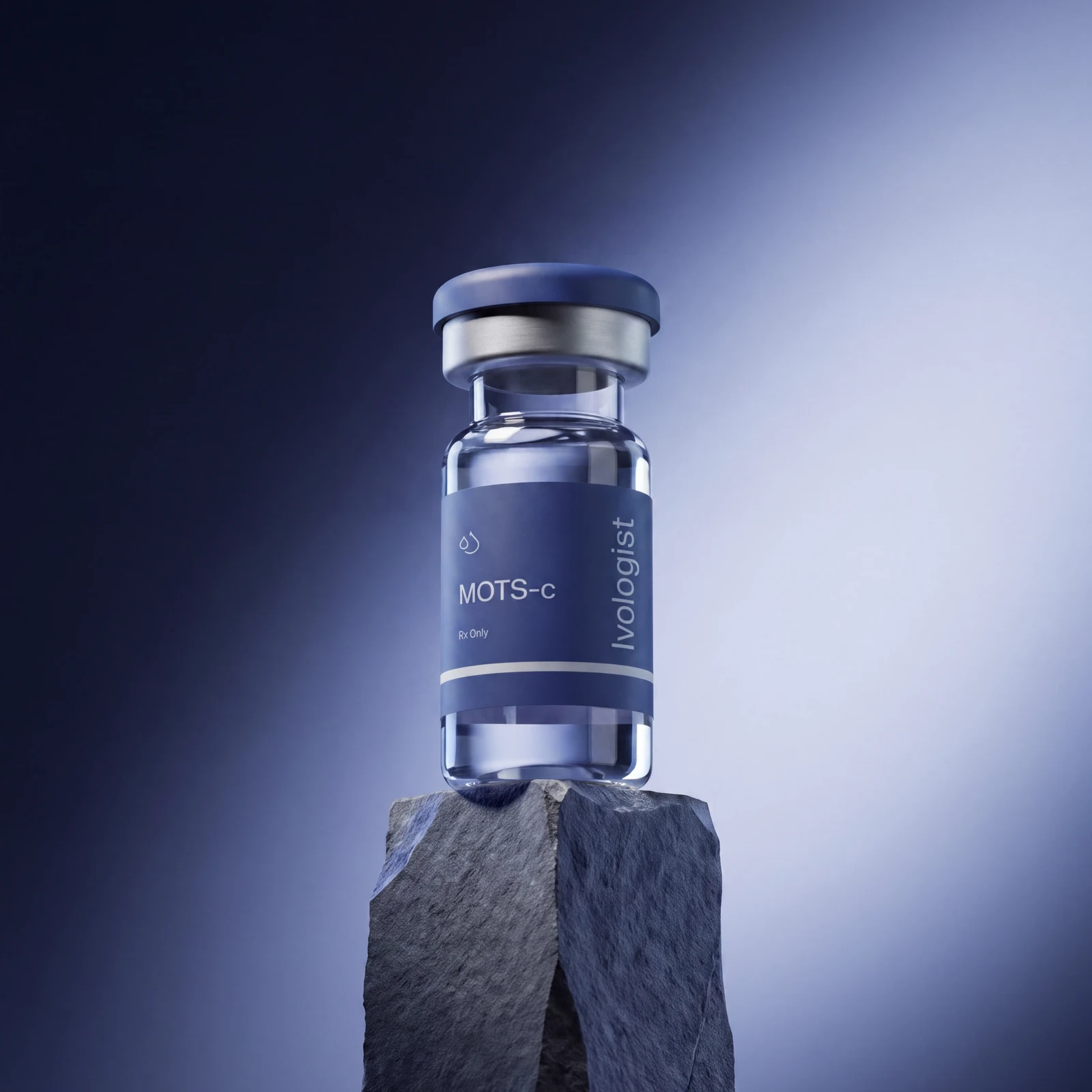
MOTS-c is a mitochondrial-derived peptide studied for insulin sensitivity, metabolism, and exercise capacity — often called an “exercise mimetic.” Human evidence is early-stage and it is used as a metabolic adjunct. Ivologist prescribes it after a medical telehealth consultation. MOTS-c is not FDA-approved.
MOTS-c Therapy
A clinician-guided MOTS-c protocol for metabolic-health goals, prescribed in 12-week cycles. MOTS-c is studied for insulin sensitivity and exercise capacity; human evidence is early-stage. Includes provider consultation, medication supply, and ongoing care guidance.
You save $99






- Clinician consultation
- Peptide medication
- Free shipping
- May require labs
One-time payment, not a subscription. Up to 3 cycles per year. A cycle is the program length; your provider decides whether treatment is right for you and sets your dose, schedule and duration. We do not offer clinical trials. Individual results may vary.
- 43,000+Patients served
 4.8Google rating
- US-licensed503A Pharmacies
In mostly animal and lab research, MOTS-c is studied for how the body handles glucose, through AMPK activation. Human evidence is early-stage.
A mitochondrial-derived peptide studied, mostly in animal research, for cellular energy and metabolism.
Licensed providers determine dosing, frequency, and duration based on medical history and clinical evaluation.
In animal studies it switches on pathways normally triggered by physical activity, and it is studied for endurance and recovery.
Your provider decides whether it fits alongside a metabolic or longevity program.
All treatment plans require medical evaluation and approval. Individual results may vary.
Take control of your health in 6 simple, affordable steps
Personalized Intake
Tell us about your health, goals, and history through a secure intake questionnaire.
Clinician Review
A licensed clinician reviews your information and determines what's right for you.
Diagnostic Lab Testing
Baseline lab work checks your health markers before any peptide is prescribed.
Clinical Evaluation
A provider reviews your labs with you in a live video visit and confirms your suitability for peptide therapy.
Medication Delivered
Your prescribed medication is prepared by a partner pharmacy and shipped to your home.
Ongoing Support
Your progress is monitored with follow-ups and adjustments as needed.
Built around 12-week cycles
Peptide programs are sold in 12-week cycles (about 3 months). You can buy one cycle or a bundle of up to 3 cycles up front, with a maximum of 3 cycles per year.
Labs and a provider consultation are required.
Every peptide program starts with lab work and a live consultation with a licensed provider before anything is prescribed.
- Lab panel includedOne cycle at a time
- Bundle of 2 · save 7.5%
- Bundle of 3 · save 12.5%
- Clinician consultation & follow-up access
- All peptide medication for the cycle
- Shipping to your door
- Injection supplies & dosing guide
Peptide therapy
Not sure which peptide program is right for you?
Talk it through first in a free 15-minute provider consultation. A U.S.-licensed provider will go over your goals and health history, explain how the programs work, and help you decide whether one is right for you before you commit to a cycle. There is no obligation to start treatment.
Book a Free Provider Consultation
Understanding Metabolic and Mitochondrial Health
Metabolism and mitochondrial function shift with age and inactivity. Learn how clinician-guided MOTS-c therapy may support insulin sensitivity, energy, and exercise capacity.
Understanding Metabolic & Mitochondrial Health
Learn about MOTS-c, how it works, and how clinician-guided therapy may support your metabolic goals.
The Physiology
Proposed Mitochondrial Peptide Signaling
Mitochondrial peptide → AMPK activation → Glucose handling + mitochondrial function
MOTS-c is encoded within the mitochondria and, in lab and animal studies, activates AMPK, a key cellular energy sensor. How it works in people is still being researched.
Because in that research it triggers pathways normally switched on by physical activity, it's often described as an “exercise mimetic.”
Symptoms
Symptoms & Signals
Some individuals report patterns such as:
Experiencing multiple patterns may warrant clinician evaluation.
Who Is It For?
Who May Benefit from MOTS-c?
MOTS-c may be considered for adults who are:
Clinical evaluation is required. Your eligibility will be determined by a licensed provider.
MOTS-c vs Exercise
MOTS-c vs Exercise Alone
How the two differ. MOTS-c's human evidence is early-stage.
MOTS-c
Studied for activating exercise-related metabolic pathways (AMPK), mostly in animal research.
- A clinician-guided adjunct
- Used alongside activity, not instead of it
- Researched for insulin sensitivity
- Human evidence: early-stage
Exercise Alone
The foundation of metabolic health.
- •Essential and irreplaceable
- •MOTS-c is studied as a complement, not a substitute
MOTS-c is not a replacement for physical activity. Treatment decisions are determined through clinician evaluation.
Protocol
Protocol Philosophy
MOTS-c is studied alongside activity, so providers often pair it with training.
An example, not your plan. This page offers injectable MOTS-c only. The 12-week cycle you choose is the program: clinician consultation, peptide medication and free shipping; labs may be required. It is not a dosing schedule; your provider decides your dose, how often and for how long.
Early (Weeks 1–4)
Injections begin as your provider prescribes, often in the morning, fasted, before exercise.
Build (Weeks 4–8)
Some people report energy or endurance changes. This is not guaranteed.
Review (Weeks 8–12)
Your provider reassesses your metabolic markers and response.
Ongoing
Any longer-term use is your provider's decision, reviewed cycle by cycle.
Responses vary by individual.
Research Findings and Limits
Research Findings and Limits
What MOTS-c has been studied for, and the kind of study behind each:
Limits of the research. MOTS-c's evidence is mainly laboratory and animal work, and human evidence is early-stage. No outcome is guaranteed.
Individual responses vary.
Designed for Safety.Guided by Clinicians.
- Not a treatment for diabetes — MOTS-c is early-stage, compounded and not FDA-approved, and never replaces diabetes care
- Blood sugar is monitored — especially in people with diabetes or prediabetes
- Gradual, not instant — any response builds over weeks and is not guaranteed; your provider assesses it over a full 12-week cycle
MOTS-c is screened for contraindications (pregnancy and breastfeeding) and blood-sugar concerns before it is prescribed

Our patients trust us because we combine real medicine with real care.

DeRonica Lamb
Patient
I was met with professionalism by Michael. He was very knowledgeable and an expert with starting the IV. Only took one attempt which I was grateful for. I've experienced medical st...
Cheryl Taylor
Patient
Was in Dallas @ conference, 1st time trying an IV with magnesium support, was comfortable and easy to do, afterwards felt a difference in my sleep where I had more restful sleep. I...
Keith Akada
Patient
Have always heard from friends the benefits of having an IV. Now I am a believer. First timer and the experience and results were great. For sure was a refresher I could tell my bo...
Mending Vines Foundation
Patient
I've been feeling fatigued and foggy. Madeline was on time, efficient, great to talk with. I highly recommend!!! Next treatment in 2 weeks!
joann pena
Patient
I absolutely love this company! I use the bags when I am not feeling well and they always make me feel better so quickly! It is so convenient that they come directly to you for no ...
Luan Martin
Patient
I love that they come to your house. They are very professional and I couldn't ask for anything more. I've been taking Myers Cocktails for over 20 years and since moving to this ar...
Melinda Tijerina
Patient
B-12 shot was great boost of energy!
 Legitscript certified
Individual experiences vary. Testimonials reflect personal opinions and do not guarantee outcomes.
The licensed providers behind your personalized care

Dr. Utkal Patel
MD, Internal Medicine
Critical Care Medicine

Samantha Alonso
Board Certified
Family Nurse Practitioner

Dalila Tarr
FNP-BC
Nurse Practitioner

Dr. Randa Soukieh
Board Certified
Family Medicine

Dr. Rashed Alfarra
Board Certified
Internal Medicine, Nephrology and Critical Care

Carrie Ferguson
FNP, BC
Nurse Practitioner

Christina Case
AGACNP-BC
Nurse Practitioner

Yana Norman
FNP
Nurse Practitioner

Lashanda Roberts
FNP-BC, BSN, RN
Nurse Practitioner

Esther Mwaura
FNP-C, AGACNP-BC
Nurse Practitioner

Dr. Arijit Chowdhury
Board Certified
Internal Medicine

Dr. Sushil Gupta
MD, FCCP
Internal Medicine, Pulmonary & Critical Care

Tynetta Eleazer
MSN, RN, APRN, FNP-BC
Nurse Practitioner

Brandon Olinger
AGACNP-BC
Nurse Practitioner

Brenda Ballard
Integrative Health Practitioner
Health Coaching
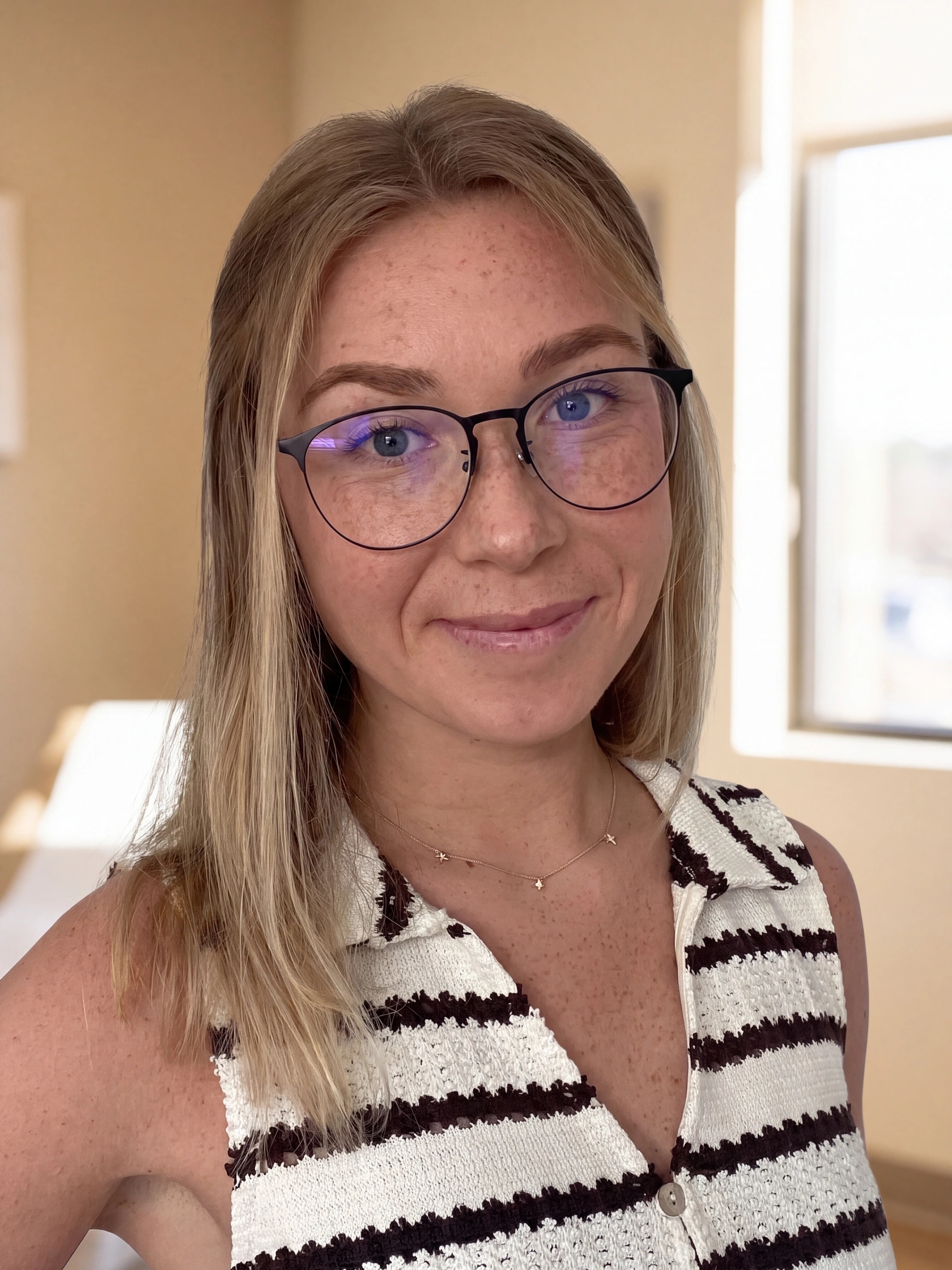
Lauren Grube
Integrative Health Practitioner
Health Coaching
Frequently Asked Questions
Get answers to commonly asked questions.
Still have questions? Contact us